How to Identify Your Skin Type at Home (Beginner-Friendly Guide)
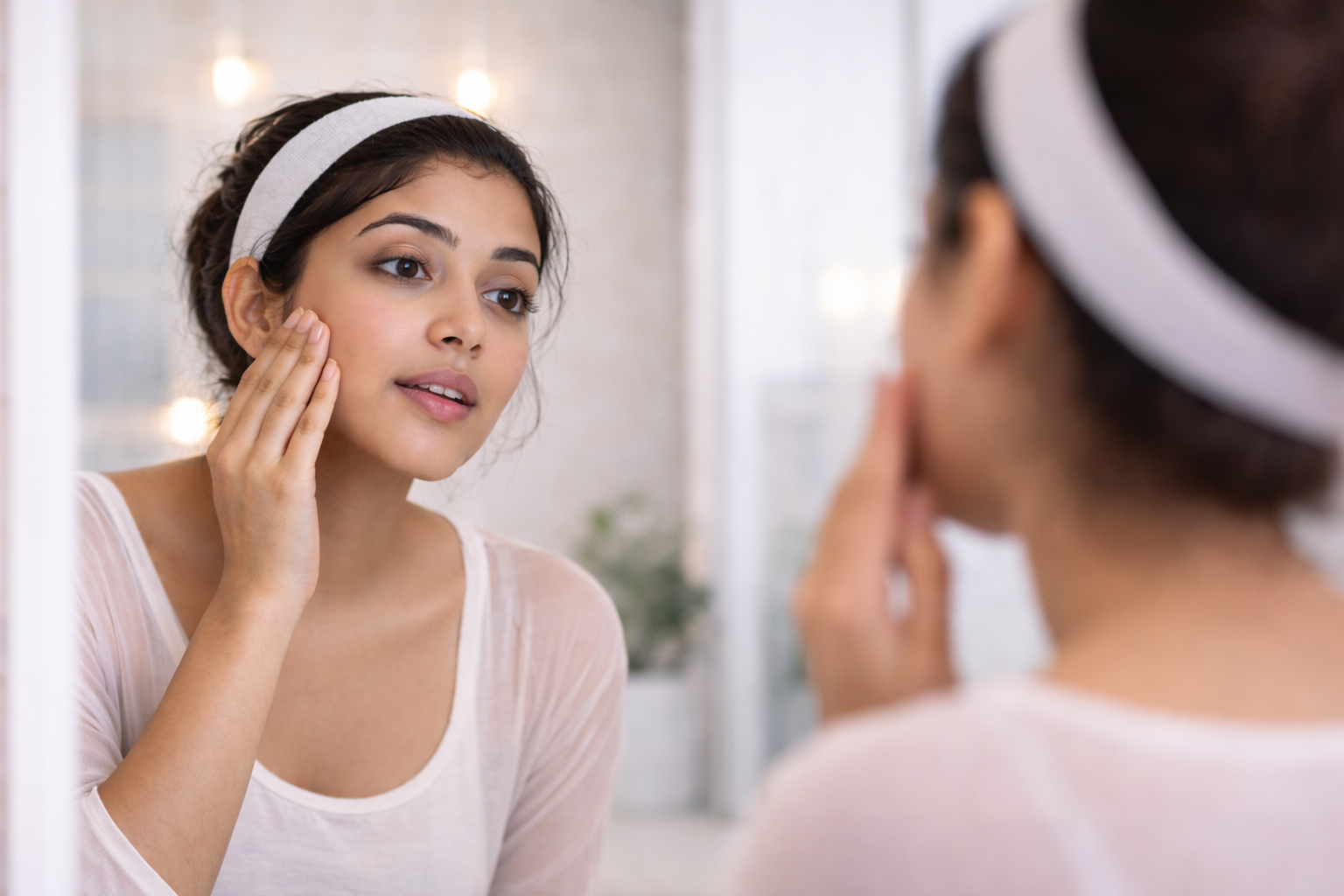
Most people are ruining their skin because they don’t actually know their skin type.
- Not because they’re careless.
- Not because skincare “doesn’t suit them.”
- But because nobody taught them how to figure it out properly.
Then they start copying influencers.
- They use products meant for oily skin on dry skin.
- They over-cleanse.
- They over-exfoliate.
- They blame hormones.
And they say, “Skincare just doesn’t work for me.”
But skincare does work.
It just doesn’t work when you’re using it for the wrong skin.
Now let’s be honest, have you ever stood in front of the mirror thinking:
- “Is my skin oily… or just sweaty?”
- “Why does my forehead shine but my cheeks feel dry?”
- “Why do products work for everyone else but not me?”
You’re not confused.
You’re just missing one piece of information.
Your actual skin type.
So, how do you identify your skin type?
But before that….
Why Knowing Your Skin Type Matters Before Starting Skincare
That’s because your skin type controls everything.
It determines:
- What kind of cleanser you should use.
- Whether you need a gel or cream moisturizer.
- Why your makeup melts.
- Why your skin feels tight after washing.
- Why breakouts appear in certain areas.
And if you’ve ever searched:
- “How to know my skin type?”
- “Skin type test at home.”
- “Oily vs dry skin difference.”
You’re already on the right track.
Because using the wrong products for your skin type can:
- Trigger excess oil production.
- Cause dryness and flaking.
- Worsen acne.
- Damage your skin barrier.
For example, if you have dry skin but use products meant for oily skin, you’ll strip your natural oils. Your skin will feel tight, irritated, and sometimes even break out more.
That’s why identifying your skin type is step one in any beginner skincare routine.
Simple Skin Type Test at Home (Step-by-Step Guide)
This is the easiest and most reliable way to identify your skin type at home.
Step 1: Wash Your Face
Use a gentle, mild cleanser.
Avoid scrubs, exfoliators, or active ingredients.
Rinse with lukewarm water and gently pat dry.
Do not apply:
- Toner
- Serum
- Moisturizer
- Sunscreen
Your skin needs to be completely bare.
Step 2: Wait 45 Minutes to 1 Hour
This is the most important step.
Your skin naturally produces oil (called sebum). After cleansing, it needs time to rebalance.
During this waiting period:
- Don’t touch your face repeatedly.
- Don’t apply any products.
- Stay indoors if possible.
Now your skin is showing its true behavior.
Step 3: Observe in Natural Light
Stand near a window or in good lighting.
Ask yourself:
- Is my whole face shiny?
- Does it feel tight?
- Is only my T-zone oily?
- Do my cheeks feel dry?
- Is there redness or irritation?
Let’s break down what your answers mean.
How to Know If You Have Oily Skin
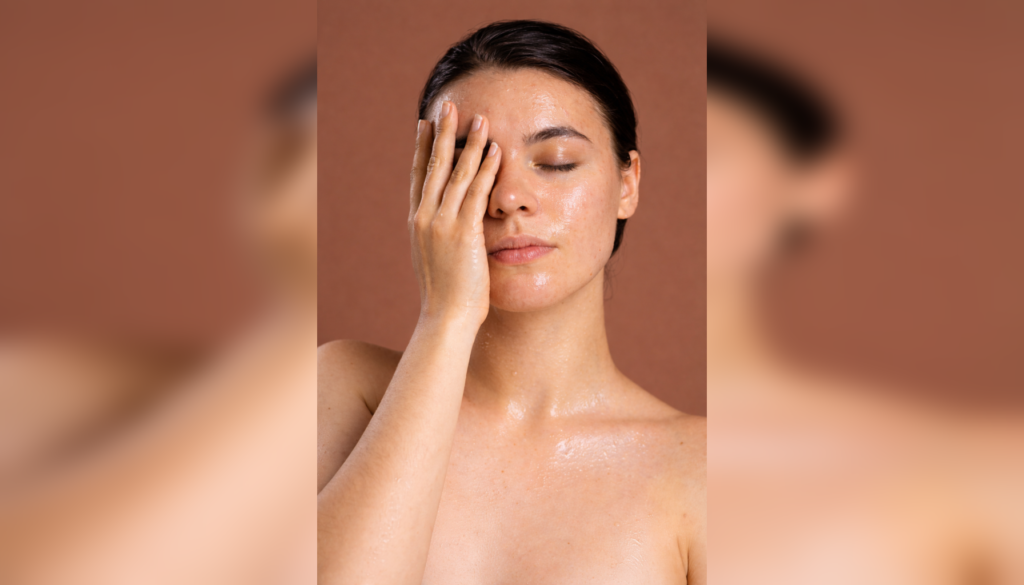
You likely have oily skin if:
- Your entire face looks shiny within an hour.
- Your skin feels greasy by midday.
- Makeup slides off easily.
- You experience frequent breakouts.
- Your pores appear larger.
Oily skin produces excess sebum. This isn’t bad, in fact, oily skin often ages slower because natural oil protects it.
But it does require balance.
If you’ve been using harsh cleansers thinking it will “remove oil,” you might actually be increasing oil production. When skin is stripped, it produces even more oil to compensate.
The goal for oily skin is oil control, not oil removal.
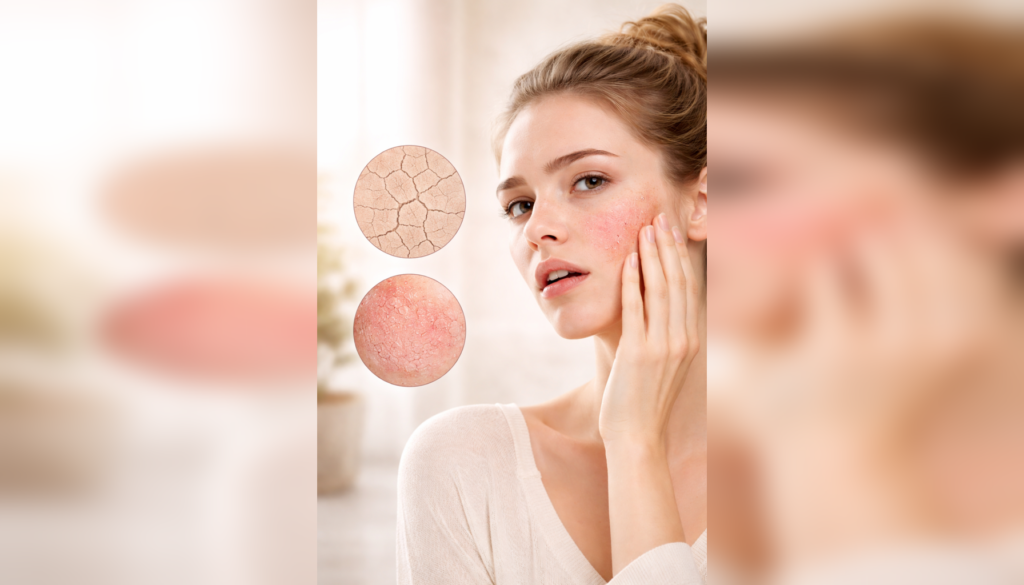
How to Identify Dry Skin
You likely have dry skin if:
- Your skin feels tight after washing.
- It looks dull or rough.
- You notice flaking.
- Fine lines are more visible
- Your skin rarely looks shiny.
Dry skin lacks natural oil. That’s why it often feels uncomfortable without moisturizer.
If your face feels stretched or itchy after cleansing, that’s a strong sign of dryness.
Dry skin needs:
- Gentle cleansers.
- Cream-based moisturizers.
- Hydrating ingredients.
- Over-exfoliating dry skin can make it worse.
How to Tell If You Have Combination Skin
Combination skin is very common.
You likely have combination skin if:
- Your forehead, nose, and chin (T-zone) are oily.
- Your cheeks feel normal or dry.
- Breakouts appear mainly around the nose or forehead.
- Makeup separates in certain areas.
This skin type confuses people because it behaves differently in different areas.
The key with combination skin is balance.
You don’t need two separate routines — you just need products that don’t over-dry or over-moisturize.
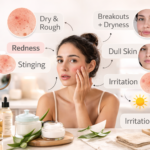
Signs You Might Have Sensitive Skin
Sensitive skin is different from oily or dry skin.
It’s about reaction.
You might have sensitive skin if:
- Products sting or burn.
- You get redness easily.
- Fragrance causes irritation.
- New products cause bumps quickly.
Sensitive skin can be oily, dry, or combination.
It just reacts more strongly to ingredients.
If your skin often feels irritated, focus on gentle formulas and avoid experimenting too much at once. You can read more about a simple skincare routine for sensitive skin here.
Common Mistakes People Make While Identifying Their Skin Type
Let’s clear up some confusion.
Mistake 1: Checking immediately after washing
Your skin will always feel dry right after cleansing.
Mistake 2: Confusing dehydration with dryness
Dehydrated skin lacks water.
Dry skin lacks oil.
You can have oily yet dehydrated skin.
Mistake 3: Assuming breakouts mean oily skin
Dry and sensitive skin can break out too.
Mistake 4: Ignoring seasonal changes
Your skin type can behave differently in summer vs winter.
You can read more here.

What to Do After Identifying Your Skin Type
Now that you’ve completed the skin type test at home, here’s what to do next.
Start simple.
A beginner skincare routine should include:
- Cleanser suited to your skin type.
- Moisturizer appropriate for your needs.
- Sunscreen (every single day).
That’s enough.
You don’t need 8 products immediately.
Let your skin adjust before adding actives like vitamin C, retinol, or exfoliating acids.
Consistency matters more than quantity.
Big Sister Advice Before You Buy Anything
Please don’t open three shopping tabs right now.
Understanding your skin type doesn’t mean replacing everything instantly. It means making smarter choices moving forward. Skincare is not about perfection. It’s about understanding your skin and respecting it.
Stop comparing your skin to influencers.
Stop chasing trends.
Stop assuming more products equal better results.
Once you know your skin type, everything becomes easier.
You stop guessing.
You stop wasting money.
You stop blaming your skin.
And you start building a routine that actually works.
Your skin has always been communicating with you.
Now you finally know how to listen.

Frequently Asked Questions (FAQs)
1. How can I identify my skin type at home naturally?
You can identify your skin type at home naturally by washing your face with a gentle cleanser, waiting 45 minutes without applying any products, and observing how your skin behaves.
2. How do I know my skin type after washing my face?
Immediately after cleansing, all skin types can feel tight, so wait at least 45 minutes before checking.
Oily T-zone with dry cheeks = combination skin
Shiny skin = oily skin
Tight and rough skin = dry skin
3. Can my skin type change over time?
Yes, your skin type can change due to:
- Weather
- Hormones
- Age
- Skincare products
- Stress
4. What is the difference between dry skin and dehydrated skin?
This is a very common confusion.
Dry skin lacks oil.
Dehydrated skin lacks water.
You can actually have oily but dehydrated skin.
5. Can sensitive skin be oily or dry?
Yes.
Sensitive skin is about how your skin reacts, not how much oil it produces.